‘All Aboard!’ for Fall Foliage
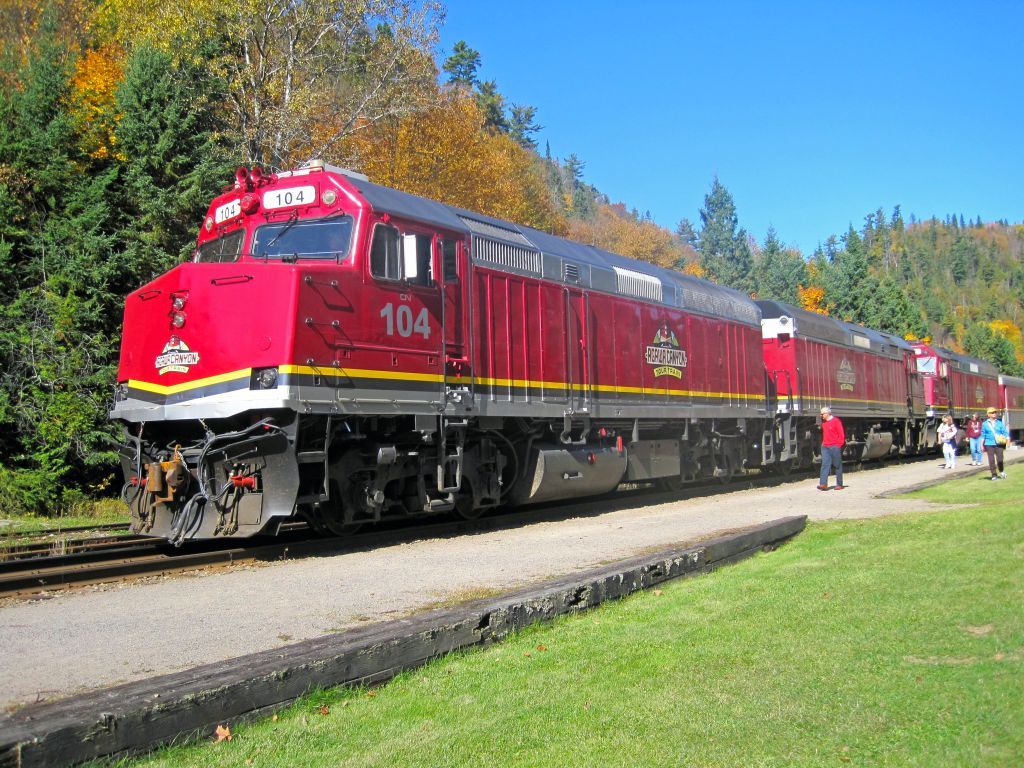
Escape this fall and enjoy a relaxing trip by train through Canada’s majestic northern landscapes.
A one-day train tour of the Agawa Canyon will take you 114 miles north of Sault Ste Marie, over majestic trestles, skirting along northern lakes and rivers and through the awesome granite of the Canadian Shield. You will see the same sights that inspired the Group of Seven to create Canada’s most notable landscape art.
So what and where is the Agawa Canyon?
The Agawa Canyon is located 183 kilometres northwest of Sault Ste Marie in Algoma County. The Canyon was created 1.2 billion years ago by faults along the Canadian Shield and was enlarged by erosion of the Agawa River. The granite bedrock of the area was formed over 2.5 billion years ago and is among the oldest rock in the world.
The Canyon got its name from the native Ojibway word for "shelter." The name makes sense since the Agawa Canyon’s walls are 575 feet at their highest point, offering early visitors some shelter from the cold winter winds.
In 1911, the first track of the Agawa Canyon railway was laid. The Algoma Central Railway began developing the Agawa Canyon Wilderness Park in 1952 by clearing a picnic area. Since then, millions of people have visited, most of them arriving on the Tour Train.
In fact, the Agawa Canyon Tour Train is the absolute best way to experience the rugged beauty of northern Ontario. This full day train excursion boards in Sault Ste Marie and travels northward through the Canadian Shield and offers the chance to explore the Canyon.
Your journey takes you over majestic train trestles, and along northern lakes and rivers. Through the window, you will see the sights that inspired the Group of Seven to create Canada’s most notable landscape art.
The train stops at the floor of the Canyon. There you’ll find walking trails, four waterfalls and 300 stairs to a lookout platform where you can take in the beauty of the area. The Lookout is 250 feet up the Canyon wall and a return trip hike takes 40 minutes.
The peak time for fall colours is generally during the last two weeks of September and the first week of October. This is when you’ll find the most spectacular landscapes - and the most tourists - so you’ll want to plan ahead!